Watch Freedom Writers Online For Free Without Download
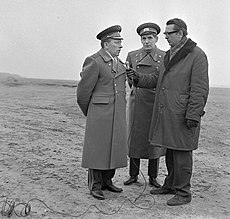
In some countries, reporting on sure topics is prevented or restricted by governments.
Freedom of the press or liberty of the media is the fundamental principle that advice and expression through diverse media, including printed and electronic media, especially published materials, should be considered a correct to be exercised freely. Such liberty implies the absence of interference from an overreaching state; its preservation may exist sought through constitution or other legal protection and security.
Without respect to governmental information, any government may distinguish which materials are public or protected from disclosure to the public. State materials are protected due to either one of two reasons: the classification of information as sensitive, classified or secret, or the relevance of the data to protecting the national interest. Many governments are too field of study to "sunshine laws" or freedom of information legislation that are used to define the ambit of national involvement and enable citizens to request access to government-held information.
The United Nations' 1948 Universal Declaration of Human Rights states: "Anybody has the right to liberty of opinion and expression; this correct includes freedom to concord opinions without interference, and to seek, receive, and impart data and ideas through any media regardless of frontiers".[1]
This philosophy is commonly accompanied by legislation ensuring various degrees of the freedom of the scientific inquiry (known equally the scientific freedom), the publishing, and the press. The depth to which these laws are entrenched in a country's legal organisation can get as far downward equally its constitution. The concept of freedom of speech is often covered past the aforementioned laws as liberty of the printing, thereby giving equal treatment to spoken and published expression. Sweden was the first country in the earth to adopt liberty of the printing into its constitution with the Liberty of the Press Act of 1766.
Relationship to cocky-publishing [edit]
Liberty of the press is non construed as an absenteeism of interference or exterior entities, such as a authorities or religious organization, rather every bit a right for authors to have their works published by other people.[two] This idea was famously summarized by the 20th century American journalist, A. J. Why, who wrote, "Freedom of the press is guaranteed just to those who own 1".[2] Freedom of the press gives the printer or publisher exclusive command over what the publisher chooses to publish, including the right to refuse to print anything for any reason.[2] If the author cannot achieve a voluntary agreement with a publisher to produce the writer's work, then the author must turn to self-publishing.
Status of printing liberty worldwide [edit]
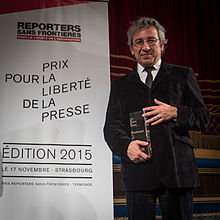
Beyond legal definitions, several not-governmental organizations utilise other criteria to judge the level of press freedom around the world. Some create subjective lists, while others are based on quantitative data:
- Reporters Without Borders considers the number of journalists murdered, expelled or harassed, and the existence of a country monopoly on TV and radio, likewise every bit the existence of censorship and self-censorship in the media, and the overall independence of media too as the difficulties that foreign reporters may face up to rank countries in levels of printing liberty.
- The Commission to Protect Journalists (CPJ) systematically tracks the number of journalists killed and imprisoned in reprisal for their work. Information technology says it uses the tools of journalism to help journalists past tracking press liberty problems through independent research, fact-finding missions, and a network of foreign correspondents, including local working journalists in countries around the earth. CPJ shares data on breaking cases with other press freedom organizations worldwide through the International Liberty of Expression Exchange, a global network of more than than 119 free expression organizations. CPJ likewise tracks impunity in cases of journalist murders. CPJ staff applies strict criteria for each instance; researchers independently investigate and verify the circumstances behind each expiry or imprisonment.
- Freedom House studies the more general political and economic environments of each nation in gild to decide whether relationships of dependence be that limit in do the level of press freedom that might exist in theory. Panels of experts assess the press freedom score and typhoon each country summary according to a weighted scoring arrangement that analyzes the political, economic, legal and safety situation for journalists based on a 100-point scale. It then categorizes countries as having a gratuitous, party free, or not gratuitous press.
Annual report on journalists killed and Prison house Census [edit]
Each yr, The Committee to Protect Journalists produces a comprehensive list of all working journalists killed in relation to their employment, including profiles of each deceased announcer inside an exhaustive database, and annual demography of incarcerated journalists (as of midnight, December 1). The year 2017 reported record findings of jailed journalists, reaching 262. Turkey, China and Arab republic of egypt account for more than than half of all global journalists jailed.[3]
As per a 2019 special report by the Committee to Protect Journalists, approximately 25 journalists were murdered on duty in the year 2019.[3] The figure is claimed to be the everyman since 2002, a year in which, at to the lowest degree 21 journalists were killed while they were reporting from the field.[4] Meanwhile, Reporters Without Borders (RSF), reported 49 killings, the lowest since 2003 when almost 36 journalists were killed. Leading press watchdogs fear persisting danger for the life of journalists. The drib in the murder of in-field journalists came across during the "global attention on the consequence of impunity in journalist murders", focusing on the bump-off of Saudi journalist Jamal Khashoggi in Oct 2018 and Daphne Caruana Galizia, a Maltese blogger in October 2017.[5]

2021 Printing Freedom Index [6]
Proficient situation
Satisfactory situation
Noticeable bug
Hard situation
Very serious situation
Non classified / No data
Every twelvemonth, Reporters Without Borders institute a subjective ranking of countries in terms of their freedom of the press. Press Freedom Alphabetize listing is based on responses to surveys sent to journalists that are members of partner organizations of the RWB, too every bit related specialists such as researchers, jurists, and human rights activists. The survey asks questions near direct attacks on journalists and the media equally well every bit other indirect sources of pressure confronting the free press, such as not-governmental groups.
In 2020, the ten countries with the most printing freedom are, in order: Norway, Finland, Kingdom of denmark, Sweden, Netherlands, Jamaica, Costa Rica, Switzerland, New Zealand and Portugal. The ten countries with the least press freedom were, in order: North Korea, Turkmenistan, Eritrea, Cathay, Djibouti, Vietnam, Syria, Islamic republic of iran, Laos, Cuba and Kingdom of saudi arabia.[7]
Liberty of the Press [edit]

Liberty of the Press status 2017.[8]
Liberty of the Press is a yearly written report past US-based non-profit organisation Liberty Firm. Information technology is known to subjectively measure the level of freedom and editorial independence that is enjoyed past the press in every nation and meaning disputed territories around the world. Levels of freedom are scored on a scale from ane (most free) to 100 (least free). Depending on the basics, the nations are then classified every bit "Free", "Partly Free", or "Non Gratis".
Autonomous states [edit]
A costless and contained printing has been theorized to be a central mechanism of a functioning, healthy commonwealth.[9] In the absence of censorship, journalism exists as a watchdog of private and authorities activeness, providing information to maintain an informed citizenry of voters.[9] In this perspective, "regime efforts to influence published or broadcasted news content, either via media control or past inducing self-censorship, represent a threat to the access of important and necessary information to the public and bear upon the quality of democracy".[x] An independent press "serves to increment political knowledge, participation and voter turnout",[9] acting as an essential driver of civic participation.
Not-democratic states [edit]
Turkey, Mainland china, Egypt, Eritrea and Saudi arabia accounted for 70% of all journalists that were imprisoned in 2018.[eleven] CPJ reported that "After Mainland china, Turkey, Saudi arabia and Egypt, the worst jailers are Eritrea, Vietnam, and Islamic republic of iran."[12]
Co-ordinate to Reporters Without Borders, more a third of the earth's people live in countries where in that location is no press liberty.[xiii] Overwhelmingly, these people alive in countries where at that place is no system of commonwealth or where at that place are serious deficiencies in the democratic process.[14] Freedom of the press is an extremely problematic problem/concept for most non-democratic systems of government since, in the modern age, strict control of access to data is disquisitional to the existence of almost not-democratic governments and their associated control systems and security apparatus. To this end, most non-autonomous societies utilize state-run news organizations to promote the propaganda critical to maintaining an existing political power base and suppress (often very brutally, through the use of police, military, or intelligence agencies) whatever significant attempts by the media or individual journalists to claiming the approved "government line" on contentious bug. In such countries, journalists operating on the fringes of what is deemed to exist acceptable volition very often discover themselves the subject of considerable intimidation by agents of the state. This can range from simple threats to their professional careers (firing, professional blacklisting) to decease threats, kidnapping, torture, and bump-off.
- The Lira Baysetova case in Kazakhstan.[fifteen]
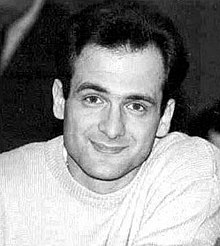
- The Georgiy R. Gongadze case in Ukraine[xvi]
- In Nepal, Eritrea, and mainland Red china, journalists may spend years in jail simply for using the "wrong" discussion or photograph.[thirteen]
History [edit]
Europe [edit]
Central, Northern and Western Europe has a long tradition of freedom of spoken communication, including freedom of the press. Afterward Globe War II, Hugh Baillie, the president of United Press wire service based in the U.Due south., promoted freedom of news dissemination. In 1944, he chosen for an open organisation of news sources and transmission, and minimum of government regulation of the news. His proposals were aired at the Geneva Briefing on Liberty of Data in 1948, but were blocked past the Soviets and the French.[17]
Media freedom is a cardinal right that applies to all fellow member states of the European Union and its citizens, as defined in the EU Lease of Fundamental Rights as well as the European Convention on Human being Rights.[18] : 1 Within the EU enlargement procedure, guaranteeing media freedom is named a "key indicator of a country's readiness to get part of the EU".[19]
Britain [edit]
According to the New York Times, "Britain has a long tradition of a gratuitous, inquisitive press", but "[u]nlike the Us, Britain has no constitutional guarantee of press freedom."[20] Liberty of the press was established in Peachy Britain in 1695, with Alan Rusbridger, former editor of The Guardian, stating: "When people talk about licensing journalists or newspapers the instinct should be to refer them to history. Read about how licensing of the printing in Britain was abolished in 1695. Call back how the freedoms won here became a model for much of the rest of the earth, and be conscious how the world still watches us to see how we protect those freedoms."[21]

Until 1694, Great Great britain had an elaborate organization of licensing; the most recent was seen in the Licensing of the Press Act 1662. No publication was allowed without the accompaniment of a government-granted license. Fifty years before, at a time of ceremonious war, John Milton wrote his pamphlet Areopagitica (1644).[22] In this piece of work Milton argued forcefully confronting this form of authorities censorship and parodied the idea, writing "when every bit debtors and delinquents may walk away without a keeper, but inoffensive books must not stir forth without a visible jailer in their championship." Although at the time it did little to halt the practise of licensing, it would exist viewed later a significant milestone as one of the nearly eloquent defenses of press freedom.[22]
Milton's key statement was that the individual is capable of using reason and distinguishing right from incorrect, good from bad. In order to exist able to exercise this ration right, the individual must have unlimited admission to the ideas of his fellow men in "a free and open up run across." From Milton's writings developed the concept of the open marketplace of ideas, the idea that when people fence confronting each other, the good arguments volition prevail. 1 course of speech that was widely restricted in Peachy United kingdom was seditious libel, and laws were in place that made criticizing the government a law-breaking. The male monarch was above public criticism and statements critical of the government were forbidden, according to the English court of the Star Bedchamber. Truth was not a defense to seditious libel because the goal was to preclude and punish all condemnation of the government.
Locke contributed to the lapse of the Licensing Act in 1695, whereupon the press needed no license. Still, many libels were tried throughout the 18th century, until "the Society of the Bill of Rights" led by John Horne Tooke and John Wilkes organized a entrada to publish Parliamentary Debates. This culminated in three defeats of the Crown in the 1770 cases of Almon, of Miller and of Woodfall, who all had published ane of the Letters of Junius, and the unsuccessful arrest of John Wheble in 1771. Thereafter the Crown was much more conscientious in the application of libel; for example, in the aftermath of the Peterloo Massacre, Burdett was convicted, whereas by contrast the Junius matter was over a satire and sarcasm virtually the non-lethal deport and policies of government.
In Britain'south American colonies, the first editors discovered their readers enjoyed it when they criticized the local governor; the governors discovered they could close down the newspapers. The nearly dramatic confrontation came in New York in 1734, where the governor brought John Peter Zenger to trial for criminal libel subsequently the publication of satirical attacks. The defense lawyers argued that according to English common law, the truth was a valid defense against libel. The jury acquitted Zenger, who became the iconic American hero for freedom of the press. The result was an emerging tension between the media and the government. By the mid-1760s, at that place were 24 weekly newspapers in the 13 colonies, and the satirical attack on authorities became common features in American newspapers.[23]
John Stuart Mill in 1869 in his volume On Liberty approached the problem of authority versus liberty from the viewpoint of a 19th-century utilitarian: The individual has the right of expressing himself so long as he does non harm other individuals. The good society is one in which the greatest number of persons enjoy the greatest possible amount of happiness. Applying these general principles of liberty to freedom of expression, Mill states that if we silence an opinion, we may silence the truth. The individual freedom of expression is therefore essential to the well-being of society. Manufacturing plant wrote:
- If all flesh minus one, were of one opinion, and 1, and only one person were of the opposite opinion, mankind would be no more justified in silencing that i person, than he, if he had the power, would be justified in silencing mankind.[24]
The December 1817 Trials of author and satirist William Strop for publishing three political pamphlets is considered a landmark in the fight for a free press.
Kingdom of denmark–Norway [edit]
Between September 4, 1770 and October vii, 1771 the kingdom of Kingdom of denmark–Norway had the most unrestricted liberty of press of whatever country in Europe. This occurred during the authorities of Johann Friedrich Struensee, whose 2d act was to abolish the old censorship laws. Nevertheless, due to the not bad corporeality of mostly anonymous pamphlets published that was critical and often slanderous towards Struensee's own authorities, he reinstated some restrictions regarding the liberty of press a year later, October seven, 1771.[25]
Italy [edit]
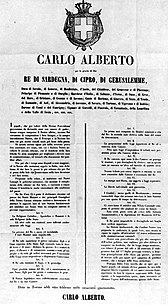
The Statute was adopted as the constitution of the Kingdom of Italy, granting freedom of the printing.
After the Italian unification in 1861, the Albertine Statute of 1848 was adopted every bit the constitution of the Kingdom of Italian republic. The Statute granted the freedom of the press with some restrictions in case of abuses and in religious matters, as stated in Article 28:[26]
The press shall be free, only the police may suppress abuses of this freedom. Yet, Bibles, catechisms, liturgical and prayer books shall not exist printed without the prior permission of the Bishop.
Subsequently the abolition of the monarchy in 1946 and the absconding of the Statute in 1948, the Constitution of the Republic of Italy guarantees the freedom of the press, as stated in Article 21, Paragraphs 2 and 3:[27]
The press may non be subjected to whatever authorisation or censorship. Seizure may be permitted simply by judicial order stating the reason and only for offences expressly adamant by the law on the press or in case of violation of the obligation to identify the persons responsible for such offences.
The Constitution allows the warrantless confiscation of periodicals in cases of absolute urgency, when the Judiciary cannot timely intervene, on the status that a judicial validation must be obtained within 24 hours. Article 21 likewise gives restrictions confronting those publications considered offensive by public morality, as stated in Paragraph 6:
Publications, performances, and other exhibits offensive to public morality shall be prohibited. Measures of preventive and repressive measure against such violations shall be established by law.
Nazi Germany (1933–1945) [edit]
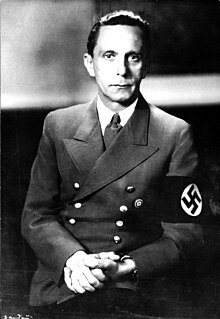
In 1933, freedom of the printing was suppressed in Nazi Deutschland past the Reichstag Fire Decree of President Paul von Hindenburg, only equally Adolf Hitler was coming to power. Hitler suppressed freedom of the printing through Joseph Goebbels' Ministry building of Public Enlightenment and Propaganda.[28] The Ministry acted as a fundamental command point for all media, issuing orders every bit to what stories could exist run and what stories would be suppressed. Anyone involved in the film industry, from directors to the lowliest assistant, had to sign an oath of loyalty to the Nazi Political party due to opinion-irresolute power Goebbels perceived movies to have; Goebbels himself maintained some personal command over every single film made in Nazi Europe. Journalists who crossed the Propaganda Ministry were routinely imprisoned.
Sweden [edit]
Ane of the world'southward first freedom of the press acts was introduced in Sweden in 1766, mainly due to classical liberal fellow member of parliament, Ostrobothnian priest, Anders Chydenius.[29] [30] [31] [32] Excepted and liable to prosecution was only song opposition to the king and the Church building of Sweden. The act was largely rolled dorsum afterwards King Gustav's insurrection d'état in 1772, restored after the overthrowing of his son, Gustav Iv of Sweden in 1809, and fully recognized with the abolitionism of the male monarch's prerogative to cancel licenses in the 1840s.
Russia [edit]
The US Secretarial assistant of State, Mike Pompeo, criticized Russian federation for limiting the activities of VOA and Radio Free Europe in Russia with a governmental society enervating reviewing the subject by Moscow.[33]
Roumania
Until 1989, Roumania was part of the communist block, with no freedom of speech and only a handful of newspapers, all controlled by the communist government. Radio Free Europe/Radio Liberty was the only connection with the rest of Europe, only it was highly illegal and people were afraid to mind to it. In 1990, with the fall of the regime, Romania is trying to find out what a costless media means. The erstwhile communist newspapers are revamped, almost of them having the word "freedom" in their names. Romania Libera (Free Romania), Cuvantul Libertatii (The word of Freedom), Libertatea (Freedom), to name just a few.
Turkey [edit]
More 120 journalists remained in prison in Turkey in 2019, making it the nigh prolific incarcerator of journalists in the world.[34]
Americas [edit]
United States [edit]
The First Amendment of the United States Constitution states:
Congress shall make no police force respecting an establishment of religion, or prohibiting the free exercise thereof; or abridging the freedom of speech communication, or of the press; or the right of the people peaceably to assemble, and to petition the government for a redress of grievances.
Canada [edit]
Section 2(b) of the Canadian Charter of Rights and Freedoms states that everyone has "the freedom of thought, belief, opinion and expression, including liberty of the printing and other media of communication."[35]
The open up court principle ensures the freedom of the printing past requiring that courtroom proceedings presumptively be open and accessible to the public and to the media.
Asia [edit]
Bahrain [edit]
According to Reporters without Borders, a number of reporters in Bahrain were jailed. Some were besides tortured or were exiled.[36]
Islamic republic of iran [edit]
According to the reports of the RSF in 2007, the liberty of Printing in Iran ranked 166 amid 169 states. The report reads the Iranian journalists face the "extreme harsh beliefs of the Iranian government that foreclose them criticizing authorities or expressing political and social demands.[37]
Afterward shutting downward of a Ukrainian airliner, the agents of the Iranian Intelligent Service raided the houses and offices of many Iranian journalists seeking for their PCs, cell phones, books, and documents. These journalists had revealed the lies of the Iranian authorities. Some of the journalists received warnings by the authorities and forced to close down their accounts in Instagram, Twitter, and Facebook.[38]
Demanding promotion of the global Freedom of Media, in December 1993, UNESCO called the third of Apr equally "International day for Liberty of Media". This is while the RSF reported at to the lowest degree 860 journalists take been detained and imprisoned from 1979 to 2009 in Islamic republic of iran.[39]
On April 21, 2020 Paris-based Reporters Without Borders (RSF) said in its annual press freedom rankings that the pandemic was "highlighting many crises" already casting a shadow on press freedom, around the world, with disciplinarian states including Iran suppressing details of the outbreak.[40]
RSF accused Islamic republic of iran—in 173rd place—of censoring major coronavirus outbreaks.[40]
On May ii, 2020, on the occasion of the 3rd of May, the International Day of Freedom of Printing, in a statement, the Iranian Writer Clan emphasized on the existence of censorships and violation of freedom of speech and its subversive impacts on the structure and vital foundation of the society. Information technology reminded that during the past decades the rulers in our country, have imprisoned more than 890 journalists and reporters, some of whom have been executed. The Iranian Writer Association expressed its regret when Iran ranked 173 amid 180 states due to freedom of speech.[41]
On 7 February 2020, the International Federation of Journalists in a statement condemned "raiding of Iranian Security Forces upon the houses of vi Iranian journalists, holding the forces of "IRGC'southward Intelligence" responsible for contempo pressures on the journalists. The secretary-general of the federation, Anthony Blunker, said that intimidating and threatening journalists are unpleasant tools to silence the public opinion of the administration.[42]
On November 26, 2019, the RSF condemned the pressure on families of reporters by the Iranian regime, maxim Iran ranked 170 among 180 states regarding Freedom of Press in 2019.[43]
In its 2019 annual written report, the Commission to Protect Journalists constitute at least 250 journalists in jail in relation to their work, and stated that the number of imprisoned journalists in Islamic republic of iran was 11, citing the crackdown on protests by the Iranian people over ascent gasoline prices. The report named Eritrea, Vietnam and Iran equally "the worst prisons for journalists" after China, Turkey, Saudi arabia and Egypt.[44] [45]
On September 8, 2020, Reporters Without Borders expressed business concern about the continuing detention and repression of journalists in Iran, and warned for the journalists and Reporters who take been arrested for their activities and subjected to harassment. "The Homo Rights Quango must take more than serious action to protect and defend journalists," said an official.[46]
On Monday, November 9, 2020, Ralph Nestmeyer, Vice President of the German Department of the Pen Association, referred to the repressive methods of authoritarian regimes: "Freedom of expression has declined in many parts of the earth." He added that dictatorial regimes respond to any criticism with violence and imprisonment. This year the World Pen Association (Pen), will concentrate on the fate of writers in Iran, Communist china, Turkey, Peru and Uganda.[47]
Human Rights Spotter condemned the penalization of the capital punishment and demanded that it be prevented at all toll, following the December 12 execution of an Iranian dissident on vague charges. Rouhallah Zam, the founder of Telegram channel Amadnews, was allegedly detained when he was visiting Iran in October 2019. He was deported forcibly to Islamic republic of iran and convicted of vague national security charges, as per Human Rights Watch. Zam faced trial for his 'activism' after beingness deported to Iran. The Iranian Supreme Court confirmed his verdict on December eight and the announcer was executed on December 12.[48]
Palestine [edit]
In October 2019, the Palestinian Authority blocked 59 websites, claiming that they were critical of the government. These websites were both Palestinian and Arabic, and were identified to take been publishing material that "threaten national security and ceremonious peace." Quds News Network, amid the blocked sites, stated that the move reflected the Palestinian Dominance's repression of the printing.[49]
Communist china [edit]
Critics argue that the Communist Party in Mainland china has failed to live up to its promises about the freedom of the mainland Chinese media. Freedom House consistently ranks Communist china as 'Not Free'[l] in its annual press freedom survey, including the 2014 written report. Prc announcer He Qinglian says that the PRC'due south media are controlled by directives from the Communist Party's propaganda section, and are subjected to intense monitoring which threatens penalty for violators, rather than to pre-publication censorship. In 2008, ITV News reporter John Ray was arrested while covering a 'Complimentary Tibet' protest.[51] International media coverage of Tibetan protests simply a few months before the Beijing Olympics in 2008 triggered a potent reaction inside Prc. Chinese media practitioners took the opportunity to argue with propaganda regime for more media freedom: 1 journalist asked, 'If not fifty-fifty Chinese journalists are immune to study about the problems in Tibet, how can foreign journalists know nearly the Chinese perspective almost the events?' Foreign journalists also reported that their access to sure websites, including those of human rights organizations, was restricted.[52] International Olympic Commission president Jacques Rogge stated at the end of the 2008 Olympic Games that "The regulations [governing foreign media freedom during the Olympics] might not be perfect but they are a sea-change compared to the situation earlier. We hope that they volition proceed."[53] The Strange Correspondents Guild of China (FCCC) issued a statement during the Olympics that 'despite welcome progress in terms of accessibility and the number of press conferences within the Olympic facilities, the FCCC has been alarmed at the utilise of violence, intimidation and harassment outside. The club has confirmed more than 30 cases of reporting interference since the formal opening of the Olympic media centre on 25 July, and is checking at least xx other reported incidents.'[54]
Since the Chinese state continues to exert a considerable corporeality of command over media, public support for domestic reporting has come as a surprise to many observers. Not much is known about the extent to which the Chinese citizenry believe the official statements of the CPC, nor about which media sources they perceive every bit credible and why. So far, inquiry on the media in Red china has focused on the changing relationship between media outlets and the state during the reform era. Nor is much known nearly how China's changing media environment has affected the government's ability to persuade media audiences. Research on political trust reveals that exposure to the media correlates positively with back up for the government in some instances, and negatively in others. The inquiry has been cited equally testify that the Chinese public believes propaganda transmitted to them through the news media, but also that they disbelieve information technology. These contradictory results tin can exist explained by realising that ordinary citizens consider media sources to be credible to a greater or bottom degree, depending on the extent to which media outlets have undergone reform.
In 2012 the Un High Commissioner for Human Rights urged the Chinese government to lift restrictions on media admission to the region and let independent and impartial monitors to visit and assess conditions in Tibet. The Chinese regime did non modify its position.[55]
Islamic republic of pakistan [edit]
Article 19 of the Pakistani constitution states: "Every citizen shall have the right to freedom of speech and expression, and at that place shall be freedom of the press, field of study to any reasonable restrictions imposed by law in the involvement of the glory of Islam or the integrity, security or defence force of Islamic republic of pakistan or any part thereof, friendly relations with foreign States, public order, decency or morality, or in relation to contempt of courtroom, committee of or incitement to an offence."[56] Ironically, press freedom in Pakistan flourished for the first time during Musharraf's reign, a armed services dictatorship.[57] To a large extent the media enjoys liberty of expression in spite of political force per unit area and straight bans sometimes administered by political pale holders. Political pressure on media is mostly done indirectly. I tool widely used by the authorities is to cut off 'unfriendly' media from governmental advert. Using callous laws the government has as well banned or officially silenced popular telly channels. The Pakistan Electronic Media Regulatory Dominance (PEMRA) has been used to silence the circulate media by either suspending licenses or by only threatening to practice and so. In improver, media is also threatened by non-state actors involved in the current conflict. The security situation of journalists has improved and the number of journalists killed in Pakistan has as well declined considerably. However, printing freedom in Pakistan forth with India continues to decline.
In its 2018 Press Freedom Index, Reporters Without Borders ranked Pakistan number 139 out of 180 countries based on freedom of the press. The report implied considerable improvement in the freedom of printing compared to the preceding years.[58]
Malaysia [edit]
The printing in Malaysia is controlled and journalists cannot have a chat near sure things. For instance, a British reporter in Malaysia was arrested after she reported on the 1MD scandal.[59]
Singapore [edit]
Singapore's media environment is considered to be controlled by the government.[60] [61]
Saudi Arabia [edit]

Saudi journalist Jamal Khashoggi was a journalist and critic, but was murdered by the Saudi Authorities.[62]
Kingdom of saudi arabia does not tolerate dissidents and it can impose penalties on such people. Saudi arabia is as well responsible for executing Saudi-American journalist, Jamal Khashoggi in 2018. As he entered a Saudi diplomatic mission in Turkey, a grouping of Saudi assassins got rid of him. [62]
India [edit]
The Indian Constitution, while not mentioning the word "press", provides for "the correct to liberty of voice communication and expression" (Article nineteen(1) a). However this right is field of study to restrictions nether sub clause, whereby this liberty tin can be restricted for reasons of "sovereignty and integrity of India, the security of the State, friendly relations with foreign States, public order, preserving decency, preserving morality, in relation to antipathy, court, defamation, or incitement to an criminal offence". Laws such as the Official Secrets Act and Prevention of Terrorist Activities Act[63] (PoTA) take been used to limit press liberty. Under PoTA, person could exist detained for upward to half dozen months for being in contact with a terrorist or terrorist group. PoTA was repealed in 2006, but the Official Secrets Deed 1923 continues.
For the first half-century of independence, media control by the state was the major constraint on press liberty. Indira Gandhi famously stated in 1975 that All Republic of india Radio is "a Government organ, it is going to remain a Regime organ..."[64] With the liberalization starting in the 1990s, individual command of media has burgeoned, leading to increasing independence and greater scrutiny of government.
It ranks poorly at 142nd[65] rank out of 180 listed countries in the Press Freedom Index 2021 released by Reporters Without Borders (RSF).[66] Analytically India's press freedom, as could be deduced by the Press Liberty Index, has constantly reduced since 2002, when it culminated in terms of apparent freedom, achieving a rank of lxxx amid the reported countries. In 2018, India'southward freedom of press ranking declined ii placed to 138. In explaining the decline, RSF cited growing intolerance from Hindu nationalist supporters of Indian Prime Minister Narendra Modi, and the murders of journalists such equally Gauri Lankesh.[67] [68] [69]
People's republic of bangladesh [edit]
Bangladeshi media is reportedly post-obit self-censorship due to the controversial Data and Communication Applied science (ICT) Act. Under this deed, 25 journalists and several hundred bloggers and Facebook users are reportedly prosecuted in Bangladesh in 2017.[lxx]
Bangladesh ranks poorly at 146th rank out of 180 listed countries in the Printing Freedom Alphabetize 2018 released by Reporters Without Borders (RWB).[66] Bangladeshi media has faced many problems in 2018. The country'southward virtually popular online newspaper bdnews24.com was blocked for a few hours on June 18, 2018 past Bangladesh's regulatory authority. Some other paper The Daily Star 's website was blocked for 22 hours on June 2, 2018 after it had published a report almost a victim of an extrajudicial execution in the southeastern metropolis of Cox'southward Bazar.[71]
During the road-safe protests in 2018, Bangladeshi government switched off 3G and 4G mobile data and likewise arrested a photographer named Shahidul Alam nether ICT act, after he had given an interview with Al Jazeera.[72]
Africa [edit]
Tanzania [edit]
Equally of 2018, online content providers must be licensed and pay an annual fee to the government.[73]
South Africa [edit]
Following the transition to commonwealth in 1994, the mail service-apartheid Constitution of South Africa guarantees the freedom of the press.[74]
Implications of new technologies [edit]
Many of the traditional means of delivering information are being slowly superseded by the increasing pace of modern technological advance. Almost every conventional fashion of media and information dissemination has a modernistic counterpart that offers pregnant potential advantages to journalists seeking to maintain and enhance their freedom of speech. A few unproblematic examples of such phenomena include:
- Satellite television set versus terrestrial television: Whilst terrestrial boob tube is relatively piece of cake to manage and manipulate, satellite television is much more difficult to command every bit journalistic content can hands be broadcast from other jurisdictions beyond the control of individual governments. An example of this in the Centre East is the satellite broadcaster Al Jazeera. This Arabic-language media aqueduct operates out of Qatar, whose government is relatively liberal compared to many of its neighboring states. As such, its views and content are oftentimes problematic to a number of governments in the region and beyond. All the same, because of the increased affordability and miniaturisation of satellite engineering science (e.g. dishes and receivers) information technology is but not practicable for most states to control popular access to the aqueduct.
- Net-based publishing (e.g., blogging, social media) vs. traditional publishing: Traditional magazines and newspapers rely on physical resources (due east.g., offices, press presses) that can hands be targeted and forced to close down. Internet-based publishing systems can be run using ubiquitous and inexpensive equipment and can operate from whatsoever global jurisdiction. Nations and organisations are increasingly resorting to legal measures to accept control of online publications, using national security, anti-terror measures and copyright laws to effect takedown notices and restrict opposition speech.[75]
- Internet, anonymity software and strong cryptography: In improver to Internet-based publishing, the Internet (in combination with anonymity software such equally Tor and cryptography) allows for sources to remain anonymous and sustain confidentiality while delivering information to or deeply communicating with journalists anywhere in the globe in an instant (east.g. SecureDrop, WikiLeaks).
- Vocalisation over Net protocol (VOIP) vs. conventional telephony: Although conventional telephony systems are hands tapped and recorded, modern VOIP technology can apply low-cost potent cryptography to evade surveillance. As VOIP and similar technologies get more than widespread they are likely to make the constructive monitoring of journalists (and their contacts and activities) a very difficult chore for governments.
Naturally, governments are responding to the challenges posed by new media technologies by deploying increasingly sophisticated engineering of their own (a notable example being Cathay's attempts to impose command through a country-run cyberspace service provider that controls access to the Cyberspace) simply it seems that this will become an increasingly hard chore every bit journalists continue to observe new ways to exploit technology and stay 1 stride ahead of the generally slower-moving government institutions that try to conscience them.
In May 2010, U.Due south. President Barack Obama signed legislation intended to promote a free printing effectually the world, a bipartisan measure inspired by the murder in Islamic republic of pakistan of Daniel Pearl, the Wall Street Journal reporter, soon afterwards the September 11 attacks in 2001. The legislation, called the Daniel Pearl Liberty of the Printing Human action, requires the United States Department of Country to expand its scrutiny of news media restrictions and intimidation as office of its almanac review of human rights in each country.[76] In 2012 the Obama Administration nerveless advice records from 20 carve up home and part lines for Associated Press reporters over a two-month menses, possibly in an effort to curtail government leaks to the press. The surveillance caused widespread condemnation by Start Amendment experts and free printing advocates, and led 50 major media organizations to sign and send a letter of protest to United States attorney general Eric Holder.[77] [78]
World ranking [edit]
World ranking 2015 [edit]
On February 12, 2015, the Reporters without Borders (RSF) published its annual report. In this report, 180 states have been reviewed based on the freedom of press, contained media and also the situation of reporters and journalists. Islamic republic of iran is at the 173rd of this list that indicates, despite the Rouhani's promises, freedom of speeches and journalists has non been improved; the RSF concerns proceed. According to the report, Iran ranked third on the list on the imprisonment of journalists.[79]
World ranking 2016 [edit]
On December 13, 2016, the Reporters without Borders (RSF) published its almanac report. The study reads: 348 journalists take been detained and 52 taken earnest in Iran in 2016. Following Turkey, China, Syria, Egypt, and Iran have nearly two-thirds of detained journalist.[80]
Earth ranking 2017 [edit]
Based on the 2017 annual report on RSF, Islamic republic of iran along with China, Turkey, Vietnam, and Syria are the largest prison for reporters and media activists. The report says during 2017, among professional journalists, fifty have been killed and 326 detained; 54 reporters accept been taken hostage.[81]
World ranking 2018 [edit]
The RSF in its annual report in 2018 documented deadly violence and misbehavior confronting reporters saying for one year eighty reporters take been killed, 348 detained, and threescore taken earnest which indicates an unprecedented hostility against media staff. This organization recognizes Iran every bit one of the 5 states which is called "prison of reporters" along with China, Kingdom of saudi arabia, Egypt, and Turkey. Based on this report Iran is ranked 144th and is however one of the greatest prisons for journalists.[82]
Globe ranking 2019 [edit]
On April 18, the RSF published its annual report, Indication for Free Media in the world. In this report, among 180 states, Norway was the freest and safest country in the world. Finland and Sweden are the next. Meanwhile, Iran lost its position in the list- compare to 2018- and is among the 11 countries that suppress the liberty of the media. Iran is on the lesser of the listing, ranked equally the 170th state.[83]
Globe ranking 2020 [edit]
On April 21, the RSF in its 2020 annual written report published the latest ranking of Freedom of Media. The Islamic Republic of Islamic republic of iran is the 173rd in the list, declining 3 steps compare to 2019. The iii Iranian allied countries, Syria, China, and North korea are 174th, 177th, and 180th. This organization accuses Communist china and Islamic republic of iran of censorship of news about an outbreak of coronavirus.[84]
World ranking 2021 [edit]
The World Press Liberty Index 2021, compiled past Reporters Without Borders, shows that journalism is completely blocked or severely restricted in 73 countries and restricted in 59 others. According to the written report, Norway ranks first among 180 countries for the 5th twelvemonth in a row. Finland is second and Sweden 3rd. In this index, Islamic republic of iran is ranked 174th with a pass up. Russian federation is also ranked 150th, China is ranked 177th, Saudi arabia is ranked 170th, Egypt is ranked 166th and Syria is ranked 173rd.[85] [86]
Organizations for press freedom [edit]
- American Civil Liberties Union
- Commodity 19
- Canadian Journalists for Costless Expression
- Commission to Protect Journalists
- Electronic Frontier Foundation
- Liberty Firm
- Index on Censorship
- Inter American Press Association
- International Freedom of Expression Exchange
- International Printing Institute
- Media Legal Defense Initiative
- OSCE Representative on Liberty of the Media
- Reporters Without Borders
- Student Press Law Centre
- World Association of Newspapers and News Publishers
- Globe Press Freedom Committee
- Worldwide Governance Indicators
Meet likewise [edit]
- Article ten of the European Convention on Man Rights
- Spooky outcome (term)
- Declaration of Windhoek (1991)
- Free Oral communication, "The People's Darling Privilege"
- Freedom of the Press Act (1766)
- Freedom of the press in the Russia
- Freedom of the press in the United States
- Liberty of the printing in Ukraine
- Free oral communication in the media during the 2011 Libyan civil war
- Gag order
- Touch of the COVID-19 pandemic on journalism
- Journalism ethics and standards
- Journaliste en danger
- Journalistic standards
- List of indices of liberty
- Media coma
- Media independence
- Media transparency
- Muckraker
- News embargo
- New York Press Club
- Photography is Not a Crime
- Prior restraint
- Section Two of the Canadian Charter of Rights and Freedoms
- Transparency of media ownership in Europe
- Tunisia Monitoring Group
- Turkey's media purge after the failed July 2016 coup d'état
- Virginia Declaration of Rights
- World Printing Freedom Day on May iii
- Press Freedom Index
References [edit]
Citations [edit]
- ^ "Universal Declaration of Human Rights". United nations . Retrieved seven August 2017.
- ^ a b c Powe, L. A. Scot (1992). The Fourth Estate and the Constitution: Freedom of the Press in America . University of California Press. p. 200. ISBN9780520913165.
- ^ a b "Explore CPJ'due south database of attacks on the printing". cpj.org . Retrieved 2020-03-07 .
- ^ "Explore CPJ's database of attacks on the printing". cpj.org . Retrieved 2020-03-07 .
- ^ "Number of journalists killed falls sharply as reprisal murders hitting record low". Committee to Protect Journalists . Retrieved 17 December 2019.
- ^ "2021 World Press Freedom Index". Reporters Without Borders. 2021.
- ^ "2020 Globe Press Liberty Alphabetize | Reporters Without Borders". RSF . Retrieved 2020-09-02 .
- ^ "World Map of the Freedom of the Press Status". Our World in Data . Retrieved 5 March 2020.
- ^ a b c Ambrey, Christopher L.; Fleming, Christopher M.; Manning, Matthew; Smith, Christine (2015-08-04). "On the Confluence of Liberty of the Printing, Control of Corruption and Societal Welfare". Social Indicators Research. 128 (ii): 859–880. doi:10.1007/s11205-015-1060-0. ISSN 0303-8300. S2CID 153582103.
- ^ Solis, Jonathan A.; Antenangeli, Leonardo (September 2017). "Corruption Is Bad News for a Free Press: Reassessing the Relationship Between Media Freedom and Abuse: Abuse Is Bad News for a Complimentary Press". Social Science Quarterly. 98 (3): 1112–1137. doi:x.1111/ssqu.12438.
- ^ "Turkey leads the world in jailed journalists". The Economist. xvi January 2019.
- ^ "About Jailed Journalists? Mainland china, Turkey, Kingdom of saudi arabia, Egypt Again Summit Annual CPJ Study". VOA News. eleven Dec 2019.
- ^ a b "Description: Reporters Without Borders". The Media Research Hub. Social Science Research Council. 2003. Archived from the original on nine Jan 2011. Retrieved 23 September 2012.
- ^ Freedom Business firm (2005). "Press Freedom Table (Press Liberty vs. Democracy ranks)". Freedom of the Press 2005. U.k.: World Audit. Retrieved 23 September 2012.
- ^ "Editor'southward girl killed in mysterious circumstances" Archived 2019-05-02 at the Wayback Motorcar, International Liberty of Expression Exchange (IFEX), 2 July 2002
- ^ "Ukraine remembers slain reporter", BBC News, xvi September 2004
- ^ Eleonora West. Schoenebaum, ed. (1978), Political Profiles: The Truman Years, pp. xvi–17, Facts on File Inc., ISBN 9780871964533.
- ^ Maria Poptcheva, Press freedom in the EU Legal framework and challenges, EPRS | European Parliamentary Inquiry Service, Conference April 2015
- ^ "European Neighbourhood Policy and Enlargement Negotiations". European Commission. Archived from the original on 2016-01-24. Retrieved 2016-02-08 .
- ^ "British Printing Liberty Under Threat", Editorial, New York Times, 14 Nov 2013. Retrieved 19 Nov 2013.
- ^ "Leveson Enquiry: British press freedom is a model for the world, editor tells inquiry". The Telegraph. fourteen Oct 2017. Archived from the original on vii Oct 2011.
- ^ a b Sanders, Karen (2003). Ideals & Journalism. Sage. p. 66. ISBN978-0-7619-6967-9.
- ^ Alison Olson, "The Zenger Case Revisited: Satire, Sedition and Political Debate in Eighteenth Century America", Early American Literature, vol.35 no.3 (2000), pp. 223–45.
- ^ John Stuart Mill (1867). On Liberty. p. 10. ISBN9780758337283.
- ^ Laursen, John Christian (January 1998). "David Hume and the Danish Contend most Freedom of the Press in the 1770s". Journal of the History of Ideas. 59 (1): 167–72. doi:ten.1353/jhi.1998.0004. JSTOR 3654060. S2CID 154481010.
- ^ "Lo Statuto Albertino" (PDF). The official website of the Presidency of the Italian Democracy. Archived from the original (PDF) on 2018-08-sixteen.
- ^ "The Italian Constitution" (PDF). The official website of the Presidency of the Italian Commonwealth. Archived from the original on 2016-11-27.
- ^ Jonathon Green; Nicholas J. Karolides, eds. (2009). Encyclopedia of Censorship. Infobase Publishing. pp. 194–96. ISBN9781438110011.
- ^ "The Liberty of the Press Deed", Sveriges Riksdag Archived 2007-09-30 at the Wayback Machine
- ^ Fortress Europe? – Circular Letter. "FECL 15 (May 1993): The Swedish Tradition of Freedom of Press". Retrieved 14 March 2016.
- ^ "The Earth'southward Start Liberty of Information Act (Sweden/Republic of finland 1766)". Scribd . Retrieved 14 March 2016.
- ^ freedominfo.org, "Sweden"
- ^ "Secretary Michael R. Pompeo With Ray Furlong of Radio Free Europe/Radio Liberty". U.S. Department of Country. 2020-08-12.
- ^ "More than 120 journalists still jailed in Turkey: International Press Institute". Reuters. nineteen November 2019.
- ^ "Canadian Charter of Rights and Freedoms". Paragraph two(b): Authorities of Canada. Archived from the original on 10 January 2016. Retrieved 20 Nov 2016.
{{cite web}}: CS1 maint: location (link) - ^ "Tenth anniversary of Bahraini blogger's arrest | RSF". 17 March 2021.
- ^ "State of origin information report IRAN" (PDF). world wide web.justice.gov. 2007-05-04.
- ^ "Reporters Without Borders: Iranian Journalists Are Victims Of Jet Crash Lies". Radio Gratuitous Europe. 2020-02-06.
- ^ "روز آزادی مطبوعات؛ ایران جزو پنج زندان بزرگ روزنامهنگاران". dw.com/fa. 2015-05-02.
- ^ a b "Coronavirus pandemic 'amplifies printing freedom threats'". AFP. Apr 21, 2020.
- ^ "بیانیه کانون نویسنگان ایران به مناسبت روز جهانی آزادی مطبوعات". HRANA. 2020-05-03.
- ^ "ادامه انتقاد نهادهای بینالمللی نسبت به موج تازه فشارها علیه روزنامهنگاران ایران". BBC. 2020-02-08.
- ^ "گزارشگران بدون مرز: سفیر ایران در لندن تهدیدی علیه رسانهها و روزنامهنگاران است". Radiofarda-fa. 2019-eleven-26.
- ^ "China, Turkey, Saudi arabia, Arab republic of egypt are world'due south worst jailers of journalists". CPJ.
- ^ "کمیته حمایت از روزنامهنگاران: ۲۵۰ روزنامهنگار در جهان زندانی هستند". BBC/western farsi. 2019-12-xi.
- ^ "خبرنگاران بدون مرز: سرکوب روزنامهنگاران ایران تشدید شده است". dw.com/fa. 2020-09-08.
- ^ "Iran: Writers Baktash Abtin, Reza Khandan-Mahabadi and Keyvan Bazhan Imprisoned". PEN INTERNATIONAL. 2020-x-xxx.
- ^ "Iran: Dissident Executed on Vague Charges". Homo Rights Sentry. 12 Dec 2020. Retrieved 12 December 2020.
- ^ "Palestinian Court Blocks 59 Websites Disquisitional of PA". The Palestine Relate. 22 October 2019. Retrieved 22 October 2019.
- ^ "China". leadingweb.de. 2020-04-fifteen. Retrieved 2019-10-03 .
- ^ "8 Tibet Activists Detained near Olympics Venue". 2010-09-15. Archived from the original on 2010-09-xv. Retrieved 2019-10-03 .
- ^ "Hundreds of websites still censored at Beijing Olympics | Spider web Scout | Los Angeles Times". 2008-08-14. Archived from the original on 2008-08-fourteen. Retrieved 2019-10-03 .
- ^ "AFP: Rogge urges China to keep foreign media freedoms". 2009-03-05. Archived from the original on 2009-03-05. Retrieved 2019-ten-03 .
- ^ "Games savage brusque of standards | The Australian". 2008-09-15. Archived from the original on 2008-09-xv. Retrieved 2019-x-03 .
- ^ "Red china must urgently address rights violations in Tibet – United nations senior official". UN News. 2012-11-02. Retrieved 2019-ten-03 .
- ^ "The Constitution of Islamic republic of pakistan". www.pakistani.org . Retrieved 2019-10-03 .
- ^ "Musharraf's respect for press freedom | Islamic republic of pakistan Press Foundation (PPF)". www.pakistanpressfoundation.org . Retrieved 2019-ten-03 .
- ^ "2019 Earth Press Freedom Index | Reporters Without Borders". RSF . Retrieved 2019-10-03 .
- ^ "Briton exiled for reporting on 1MDB returns to Malaysia | Reuters". Reuters.
- ^ "Singapore profile". BBC News. five September 2017.
- ^ Branigin, William (17 Dec 1990). "SINGAPORE VS. THE FOREIGN Printing". The Washington Post.
- ^ a b "Opinion | Jamal Khashoggi: What the Arab globe needs most is gratis expression". The Washington Post. 2018-ten-17. Retrieved 2022-02-xvi .
- ^ "The Prevention of Terrorism Act 2002".
- ^ "Freedom of the Press". PUCL Bulletin. People'due south Marriage for Civil Liberties. July 1982. Archived from the original on 2018-04-11. Retrieved 2006-10-30 .
- ^ "Republic of india : Deadly threat from Modi's nationalism - Reporters without borders". RSF.
- ^ a b "2018 Press Liberty Alphabetize". Reporters Without Borders. Retrieved 23 June 2018.
- ^ "Earth Press Liberty Index: Republic of india downward two ranks to 138, ane place above Islamic republic of pakistan". Indian. 27 April 2018. Retrieved 29 May 2018.
- ^ "Bharat'south ranking in press freedom falls to 138". The Hindu. 26 Apr 2018. Retrieved 29 May 2018.
- ^ Faisal, Mohammed (3 May 2018). "World Printing Freedom Index Written report 2018: India placed only one rank in a higher place Pakistan, but why?". Republic of india Today . Retrieved 29 May 2018.
- ^ "Press freedom report: media cocky-censorship on rise in Bangladesh". Dhaka Tribune. 2018-04-25. Retrieved 2018-08-eleven .
- ^ (www.dw.com), Deutsche Welle. "Is Bangladesh'south media freedom deteriorating? | DW | 27.07.2018". DW.COM . Retrieved 2018-08-11 .
- ^ "A Bangladeshi Photographer's Arrest Is a Worrying Sign for Printing Liberty". Time . Retrieved 2018-08-11 .
- ^ "Tanzania: Bloggers to exist charged $900 (boilerplate annual income) per twelvemonth for right to speak". Peril of Africa. fifteen Apr 2018. Archived from the original on eleven September 2019. Retrieved 25 April 2018.
- ^ Maharaj, Brij (eighteen Oct 2021). "Printing freedom in democratic Due south Africa is a fragile concept". Daily Bohemian . Retrieved three Jan 2022.
- ^ "How U.Southward. copyright police is existence used to take down Correa's critics in Ecuador - Commission to Protect Journalists". cpj.org. 21 Jan 2016. Retrieved 2017-01-xx .
- ^ "U.South. to Promote Press Freedom". New York Times. 17 May 2010.
- ^ Hicken, Jackie (15 May 2013). "Journalists push dorsum against Obama administration for seizure of Associated Press records". Deseret News . Retrieved 16 May 2013.
- ^ Savage, Charlie; Leslie Kaufman (13 May 2013). "Phone Records of Journalists Seized past U.S." The New York Times . Retrieved 16 May 2013.
- ^ "World Press Liberty Index 2015: decline on all fronts". rsf. January 25, 2016.
- ^ "2016 Round-Up: Number of journalists detained worldwide continues to rise". rsf. 2019-08-23.
- ^ "RSF round-upward: these figures are alarming". rsf. Dec 18, 2017.
- ^ "RSF's 2018 round-upwards of deadly attacks and abuses against journalists – figures upward in all categories". RSF. 2018-12-14.
- ^ "2019 World Press Freedom Index – A bike of fear". RSF. xv April 2019.
- ^ "2020 Globe Press Freedom Index: "Entering a decisive decade for journalism, exacerbated by coronavirus"". rsf.org. 2020-04-21.
- ^ "2021 World Press Freedom Index: Journalism, the vaccine against disinformation, blocked in more than than 130 countries". rsf.org. nineteen Apr 2021.
- ^ "2021 WORLD Press FREEDOM Alphabetize". rsf.org.
Sources [edit]
- Gardner, Mary A. The Inter American Press Clan: Its Fight for Freedom of the Press, 1926–1960 (University of Texas Press, 2014)
- George, Cherian. Freedom from the Press: Journalism and State Ability in Singapore (2012)
- Molnár, Peter, ed. Freedom of Voice communication and Freedom of Information Since the Autumn of the Berlin Wall (Primal European University Press, 2014)
- Nord, Lars W., and Torbjörn Von Krogh. "The Liberty of The Press or The Fright Factor? Analysing Political Decisions and Non-Decisions in British Media Policy 1990–2012." Observatorio (OBS*) (2015) 9#1 pp. ane–16.
- Stockmann, Daniela. Media Commercialization and Authoritarian Rule in China (2012)
- Thierer, Adam & Brian Anderson (2008). A Manifesto for Media Liberty . New York: Encounter Books. ISBN978-1-59403-228-8.
{{cite book}}: CS1 maint: uses authors parameter (link)
External links [edit]
- Canadian Journalists for Free Expression
- Media Freedom Navigator Media Freedom Indices at a Glance
- Risorse Etiche Publish and translate articles of independent journalists
- the ACTivist Mag
- South Eastward Europe Media Organisation
- Banned Magazine, the journal of censorship and secrecy.
- News and Free Speech communication – Newspaper Index Blog
- Press Freedom Archived 2010-01-06 at the Wayback Car
- OSCE Representative on Freedom of the Media
- MANA – the Media Brotherhood for New Activism
- International Freedom of Expression Exchange – Monitors press freedom around the world
- IPS Inter Printing Service Independent news on press freedom around the world
- The Reporters Committee for Freedom of the Press
- Reporters Without Borders
- Doha Center for Media Freedom
- World Printing Freedom Commission
- Student Press Law Center
- Union syndicale des journalistes CFDT
- Mapping media liberty in Europe
DOWNLOAD HERE
Posted by: carteroldle1970.blogspot.com


0 Comments